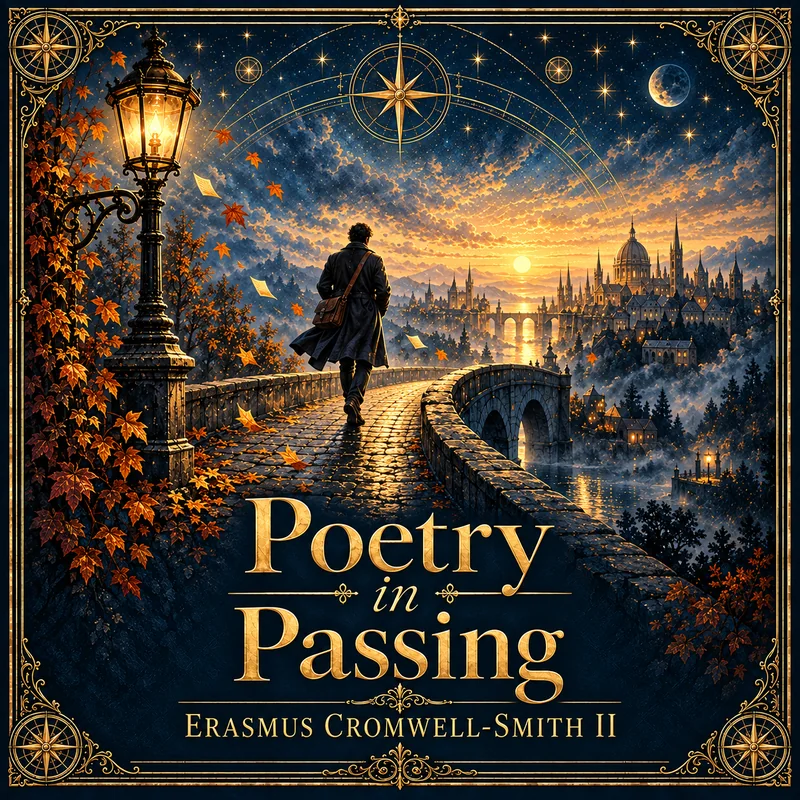
Poetry in Passing is a free sampler from Poetry in Symmetry, the complete collection of 296 poems and fables by Erasmus Cromwell-Smith II.
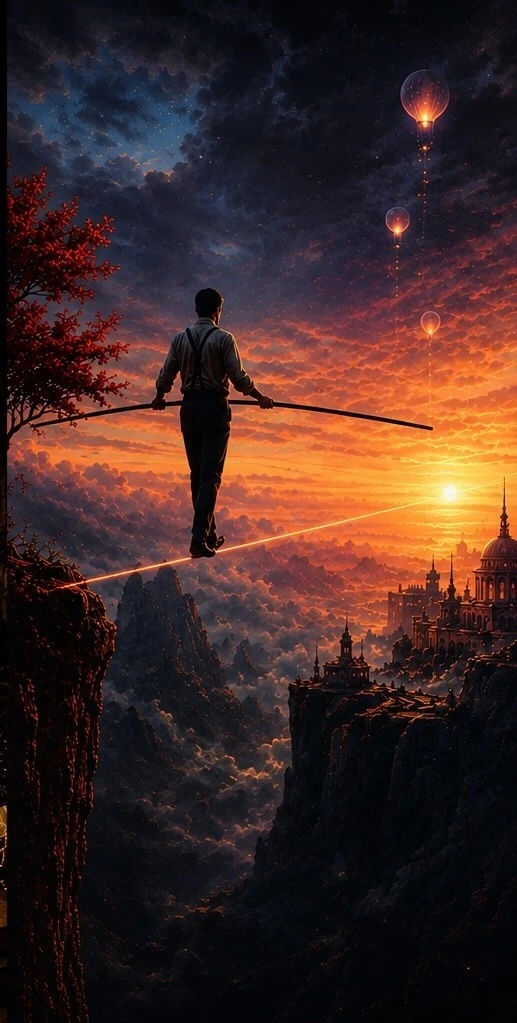
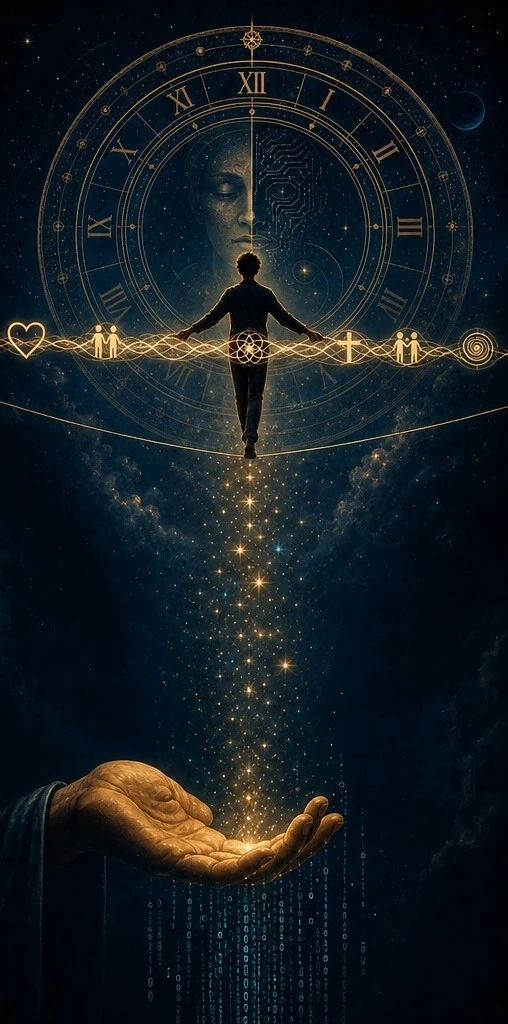
We are all of us on a wire. The wire is thin and it is narrow, but it is solid, woven from everything that holds a life together: our feelings, our faith, our friends, our family. And no one crosses on skill alone. What steadies the equilibrist is the pole he carries, and the pole is Love.
In four short movements, this book walks that wire from the inside out. The Interior names what happens within one person at three in the morning: hope, doubt, forgiveness, joy. The World gives those ideas bodies and street addresses: a luthier in Mittenwald who fixes a Stradivarius by moving it a fraction of an inch, a street vendor in Portoviejo who saves the life of the man who just humiliated him, a boy in Tromsø who walks up a mountain for six years. The Inheritance carries across the tales of older traditions, retold rather than quoted: a boatwright who saves thirty years of shavings for a lost son, a swordsmith who folds his grief like steel, a confidence man ruined by a fake clock that gave a town the one thing he could never sell. And The Threshold turns the same question toward a mind made of code, and stops where we are actually standing: hand raised, deciding whether to knock.
One question runs through all of it: what can be held, and what cannot. The hour, love, courage, a story. Everything worth having arrives free, to everyone at once, and cannot be hoarded.
Read it where it falls. If a poem here follows you out of the room, the rest of it is waiting.
Poesía al Pasar es una muestra gratuita de Poesía en Simetría, la colección completa de 296 poemas y fábulas de Erasmus Cromwell-Smith II.
Todos estamos en el alambre; lo que sostiene al equilibrista es la pértiga, y la pértiga es el Amor. En cuatro movimientos, el libro recorre ese alambre de dentro afuera: lo que ocurre en una persona a las tres de la madrugada, las historias de un lutier, una costurera y un vendedor ambulante, las fábulas heredadas de otras tradiciones, y una última pregunta dirigida a una mente hecha de código.
Una sola cuestión lo atraviesa todo: qué se puede retener y qué no. Ábrelo por donde caiga. Si un poema te sigue al salir de la habitación, el resto te espera.